

Consistency by construction beats consistency by discipline

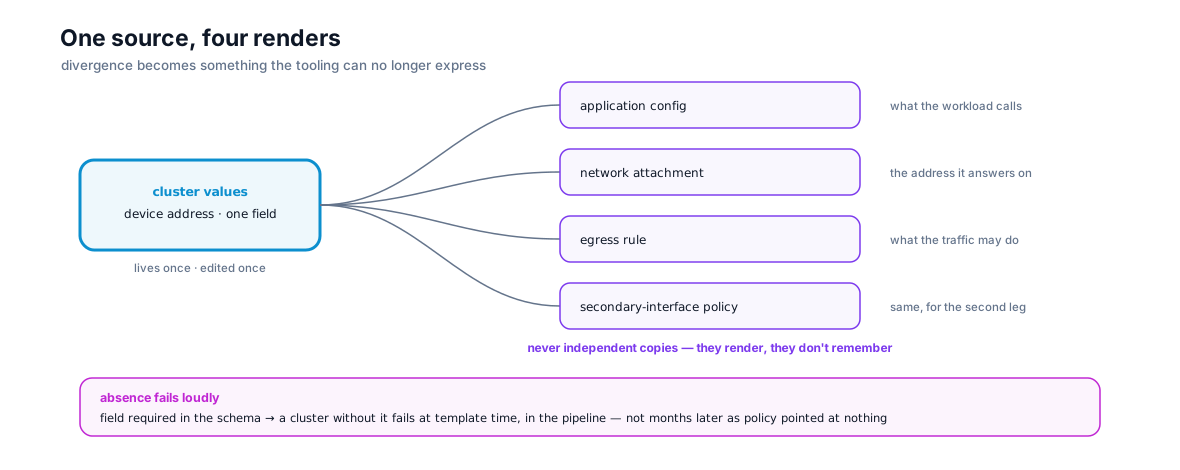
Every cluster in a small fleet runs a workload that talks to one device across a second network interface, and that device's address has to appear in four artefacts. The application config, so the workload knows what to call. The network attachment, so it gets the right address on the right interface. The egress rule, so the traffic is permitted. And the policy governing the second interface, for the same reason.
Four places. Four chances for someone to update three of them.
The failure mode has no error message
That is not hypothetical - a version of it had already happened here. An address changed in one artefact and not another, and the mismatch produced no error. It produced a policy that permitted traffic to somewhere nothing lived, while the actual traffic went somewhere unpoliced. Everything reported healthy. The enforcement had simply stopped meaning anything.
Config that must agree across several artefacts will eventually disagree, because the update path requires a human to remember all of them at once, under time pressure, months after writing them.
Template from one source
The change that held: the address lives once, in the cluster's values, and every artefact that needs it renders from there. The application config, the attachment definition, both policies - all templated from the same field.
Now they cannot disagree. Not "are unlikely to" - cannot, because there is nothing to update twice. Changing the address is one edit, and every enforcement point follows automatically because they were never independent copies to begin with.
Make absence fail loudly
The other half is refusing to render without it. The schema marks the field required, so a cluster that has not supplied an address fails at template time with a message that names the missing field. That failure is a gift: it lands in the pipeline, before anything ships, instead of surfacing months later as enforcement pointed at nothing.
The render that refuses
Discipline was the old control here, and it had already failed once. Construction does not tire and cannot half-finish an edit: every consumer renders from the one field, or nothing renders at all. The failure you want is the render that refuses, not the deployment that polices the wrong address.
Since fixed: the address field is required in the schema, and a render without it fails the pipeline.